
When a Whirlpool or KitchenAid refrigerator stops cooling and the compressor is silent, the instinct is to assume the compressor has failed. That is usually the wrong conclusion, and an expensive one. On inverter-driven refrigerators the compressor only runs when the inverter control board tells it to, so a dead board and a dead compressor look identical from the outside. This guide works through the checks in order, cheapest and most likely first.
Recommended Parts
Quick Diagnosis
- Both compartments warm and the compressor is completely silent → power, board or inverter.
- Compressor hums briefly then clicks off → start components or a locked compressor.
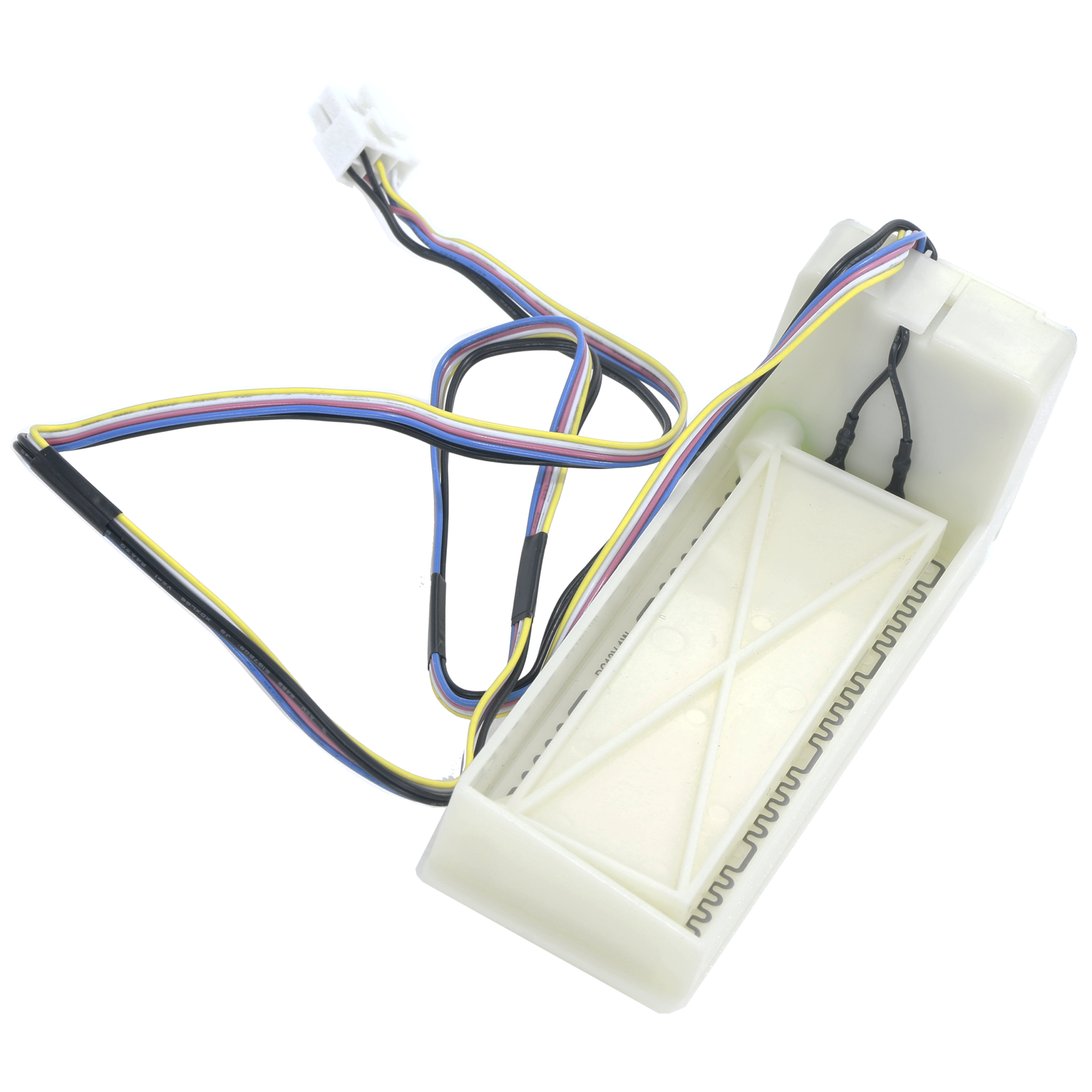
- Cold coils at the back and cold air from the vents → the compressor was never the problem; the fault is airflow, so test the air damper.
- Lights, display and fans all work → the main board is powered, which makes the inverter a strong suspect.
Tools and Safety
- The inverter board holds a lethal charge. Unplug the refrigerator and wait at least 5 minutes before touching it, even after the plug is out.
- Multimeter with an AC voltage range and a resistance range.
- Insulated screwdriver and a phone camera for connector layout.
- Do not probe the compressor terminals while the unit is powered.
Step 1: Confirm What Is Actually Happening
Before touching a screwdriver, pin down the symptom. These four patterns point in very different directions:
| What you observe | Most likely cause | Where to start |
|---|---|---|
| Fans and lights run, compressor silent | Inverter board not driving the compressor, or the main board is not signalling | Step 2, then Step 3 |
| Compressor hums a few seconds, then clicks off, repeats | Start relay, run capacitor, or a locked compressor | Step 4 |
| Compressor runs continuously but nothing gets cold | Refrigerant leak, restricted capillary tube, or dirty condenser | Not an electrical fault — call a sealed-system technician |
| One compartment warm, the other normal, compressor running | Air damper or evaporator fan | Air damper diagnostic |
| Nothing runs at all, no lights | Main control board or supply power | Check outlet and main board first |
Step 2: Verify Power Reaches the Inverter
- Unplug the refrigerator and remove the rear access panel to reach the inverter box. On most models it is mounted on the back near the compressor.
- Reconnect power and, working carefully with insulated probes, confirm mains voltage at the inverter input connector.
- No voltage at the inverter means the fault is upstream — the main control board, a fuse or the supply. Do not replace the inverter yet.
- Correct voltage at the input, with the compressor still silent, keeps the inverter in the frame.
Step 3: Check the Control Signal and the Inverter Itself
- Look for drive output at the compressor connector. With the board commanded to cool, an inverter that is working sends a variable-frequency three-phase output. This is not a simple 120 V reading — a multimeter will show an unstable value, which is normal. A completely dead reading while the input is correct points to a failed inverter.
- Inspect the board for damage. Disconnect power, wait five minutes, then look for burnt traces, bulging capacitors or a scorched smell. Visible damage confirms the diagnosis without further testing.
- Check the signal connector from the main board. A loose or corroded connector here mimics a dead inverter. Reseat it before ordering anything.
Step 4: Test the Compressor Windings
Only test the compressor once the inverter has been ruled out, because on inverter models the compressor cannot be checked properly while the board is suspect.
- Disconnect power and discharge. Unplug, wait, and remove the compressor terminal cover.
- Measure resistance between the three terminals (in pairs). The three readings should be roughly balanced — within about ten percent of each other. An open reading or a large imbalance indicates a failed winding.
- Measure each terminal to the compressor body (ground). Any continuity to ground means the compressor has shorted and must be replaced.
- Check the start relay and run capacitor if your model uses them. These are inexpensive and a far more common failure than the compressor itself.
Step 5: Replacing the Inverter Board
- Unplug the refrigerator and wait at least five minutes for the capacitors to discharge.
- Remove the rear access panel and photograph the connector layout.
- Disconnect the mains input, the compressor output and the signal connector. Note that the compressor output is a three-wire connector — it only fits one way.
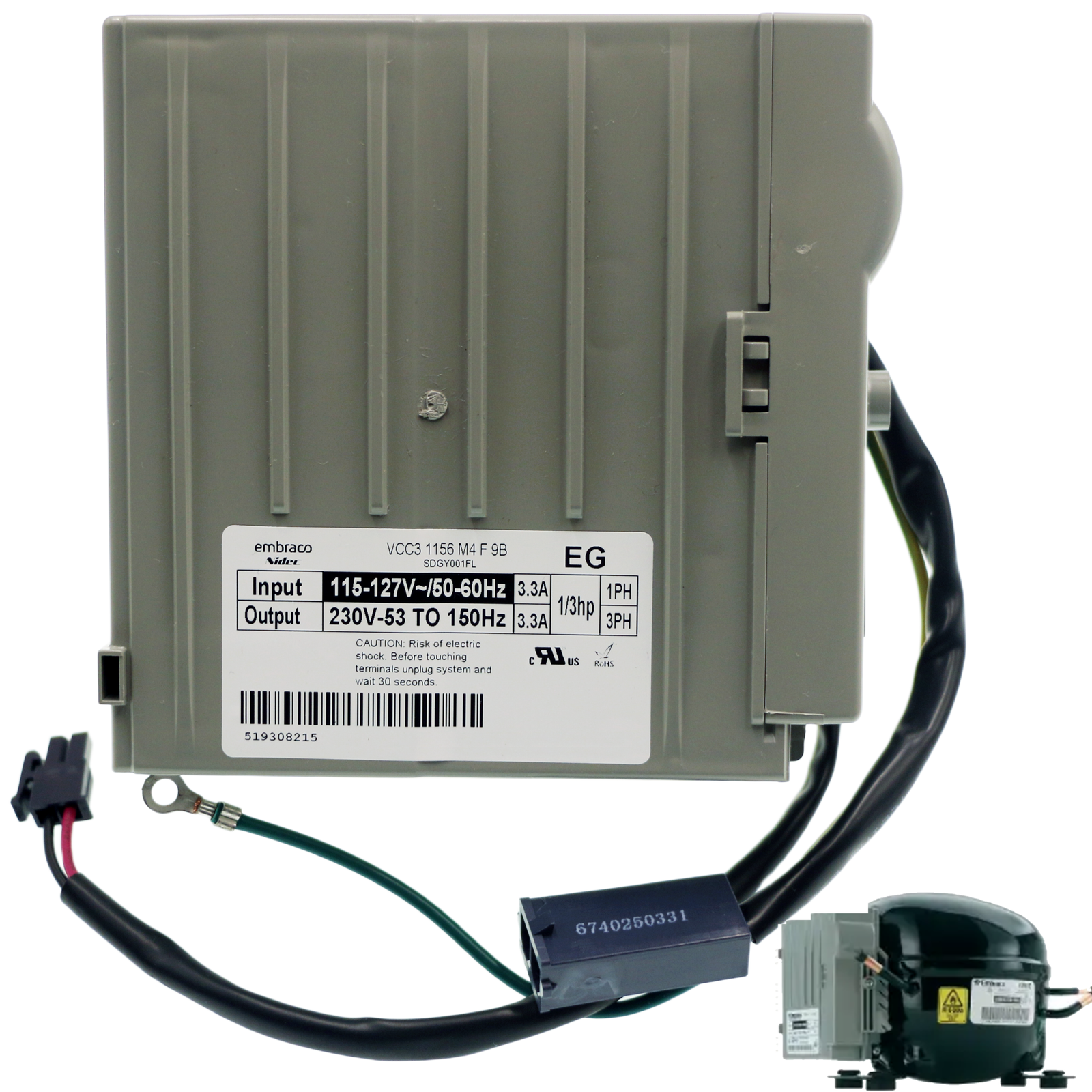
- Remove the mounting screws and lift the old board out. Confirm the replacement matches on connector count, orientation and the ratings printed on the board.
- Fit the new board, reconnect everything, and restore power. Let the unit run several hours before judging temperatures.
Part Numbers and Cross Reference
| Part | Function | Typical Symptom |
|---|---|---|
| VCC3 1156 M4 F 9B | Inverter compressor drive board, 3.3 A output | Compressor silent, fans running, no cooling |
| W11663222 | Air damper control assembly | Compressor runs but one compartment is warm |
The board is sold in the aftermarket alongside several Whirlpool inverter box numbers. Match the markings printed on your original board and confirm against your model number before ordering.
Compatibility
Inverter boards of this family are used across Whirlpool and KitchenAid refrigerators built on inverter compressor platforms, including side-by-side and multi-door models. Board revisions differ in connector orientation and output rating, so always compare the markings on your original part rather than relying on the model year alone.
Frequently Asked Questions
How can I tell if the inverter board or the compressor has failed?
Confirm mains voltage at the inverter input and check for drive output at the compressor connector. If the board has correct input and no output, the inverter is at fault. If the board outputs correctly and the compressor still will not start, test the compressor windings and start components.
Can I test the inverter board with a multimeter?
You can verify its input voltage and check for an output at the compressor connector, but the variable-frequency drive waveform needs an oscilloscope to read properly. In practice technicians confirm a failed inverter by substitution after ruling out the main board, the connectors and the compressor windings.
Does a failed inverter board always set an error code?
No. Many inverter failures produce no code at all — the compressor simply stays silent while the fans and lights work normally. Intermittent codes that clear after a power cycle are also common with a failing board.
Is it worth replacing the inverter board on an old refrigerator?
Compare the board cost against the age of the unit. A board replacement is a straightforward repair, but if the compressor windings are also out of specification the repair becomes a sealed-system job, which usually changes the economics.
Why is the inverter board so expensive to replace?
It is a variable-frequency drive, not a simple relay, so it contains power electronics that cost more than mechanical parts. Testing before ordering matters here far more than on a cheap part, because a wrong diagnosis is an expensive mistake.